♻️ Why you should buy and re-purpose old tiny PCs
📆 2026-01-19 13:20
There's a lot of hype around cloud providers and infrastructure as a service these days, but for a home lab, automation tasks, personal services, and personal publishing, you don't need powerful or expensive hardware.
What you do need is:
- low electricity usage
- quiet operation
- modest but reliable compute
- full ownership and control
That's exactly what repurposed tiny PCs and older desktops provide.
💰 Cost-effective hardware
Old tiny PCs and refurbished office machines:
- are cheap and easy to find second-hand
- sip power compared to full servers
- usually support 8 GB+ RAM and SSDs
- are reliable and easy to replace
They're perfect for self-hosting, automation, backups, monitoring, VPNs, and personal services.
🏠 Real-world example: my home cluster
🗄️ Live status and details about my Cluster
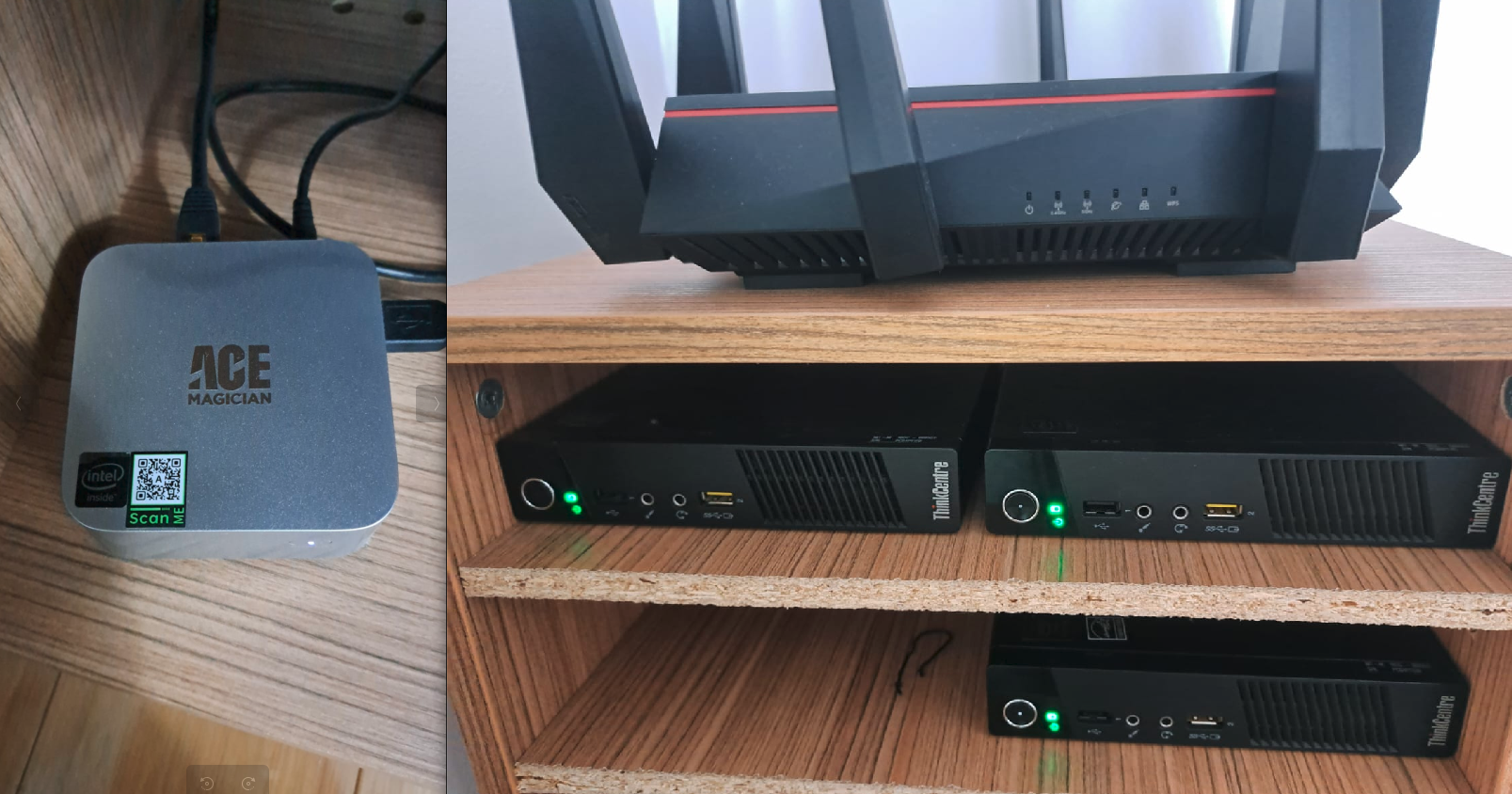
All nodes run Ubuntu Server 24.04.3 LTS, with services deployed using docker.
The entire cluster is protected by a UPS (~40 minutes runtime) with battery monitoring, allowing graceful shutdowns and continued operation during short power outages.
🌐 Multi-protocol services
One of the goals of this cluster is to host my website/gemini capsule/gopher hole and it's doing it without any issues:
The sava.rocks domain is served simultaneously over:
The same infrastructure powers all four protocols, proving that modern Linux servers can still support classic and alternative networks alongside the web.
This makes the cluster useful not just as a server, but as a publishing and experimentation platform.
🚀 Why this setup works
🧱 Resilience
Services are distributed across multiple machines; one node can fail without taking everything down.
🧠 Learning & experimentation
From networking and containers to power management and monitoring, everything is under your control.
📈 Scalability
Need more capacity? Add another cheap node.
⚡ Low noise and power draw
Tiny PCs are quiet enough for living spaces and cheap to run 24/7.
💡 What you can do with old PCs
Even a single repurposed machine is great for:
- home automation
- local DNS and caching
- monitoring and alerting
- backups
- VPN access
- protocol servers (Gemini, Gopher, Finger) to host personal websites and blogs
- CI runners or test labs
📦 Getting started
1. Buy a used tiny PC or recycled office desktop.
2. Install a minimal Linux server.
3. Containerize your services.
4. Add monitoring, backups, and UPS support.
5. Expand gradually.
Old hardware isn't obsolete - it's infrastructure waiting to be reused.