2026-01-19
- Condition: E6
- Location: Home, Spearfish: 44.49, -103.87
Unexpected clear night. A quick peek at the brighter stars outside revealed minimal atmospheric turbulence. This would be a good opportunity for a multiple star observation and an attempt at catching a glimpse of Sirius b.
Sirius b is not on any challenge list, but I added it to a personal list of objects that I want to observe due to the challenge and timing. I was not aware that Sirius had a sibling and I was intrigued when I found that out mostly for the difficulty presented in observing it. The sibling is right now separated from the primary near its maximum distance of 11.1 arcseconds and is on an orbital period of 50 years; making this the perfect time to observe it before it starts a ~25 year journey closer to the primary star. The separation of 11.1 arcseconds is more than generous enough to split the two, the difficulty comes in the vast differences in magnitude: -1.47 vs 8.44. From my research the sibling rotates well within the bright rings of the primary, making it difficult to pin point in all of the light generated from the primary.
8:57PM
- Target: ι Cassiopeiae, Σ 262
- Const: Cassiopeia
- RaDec: 02h29m +67.24
- Type: Star (Multiple)
- Scope: AT102ED
- Setting: 150x-204x
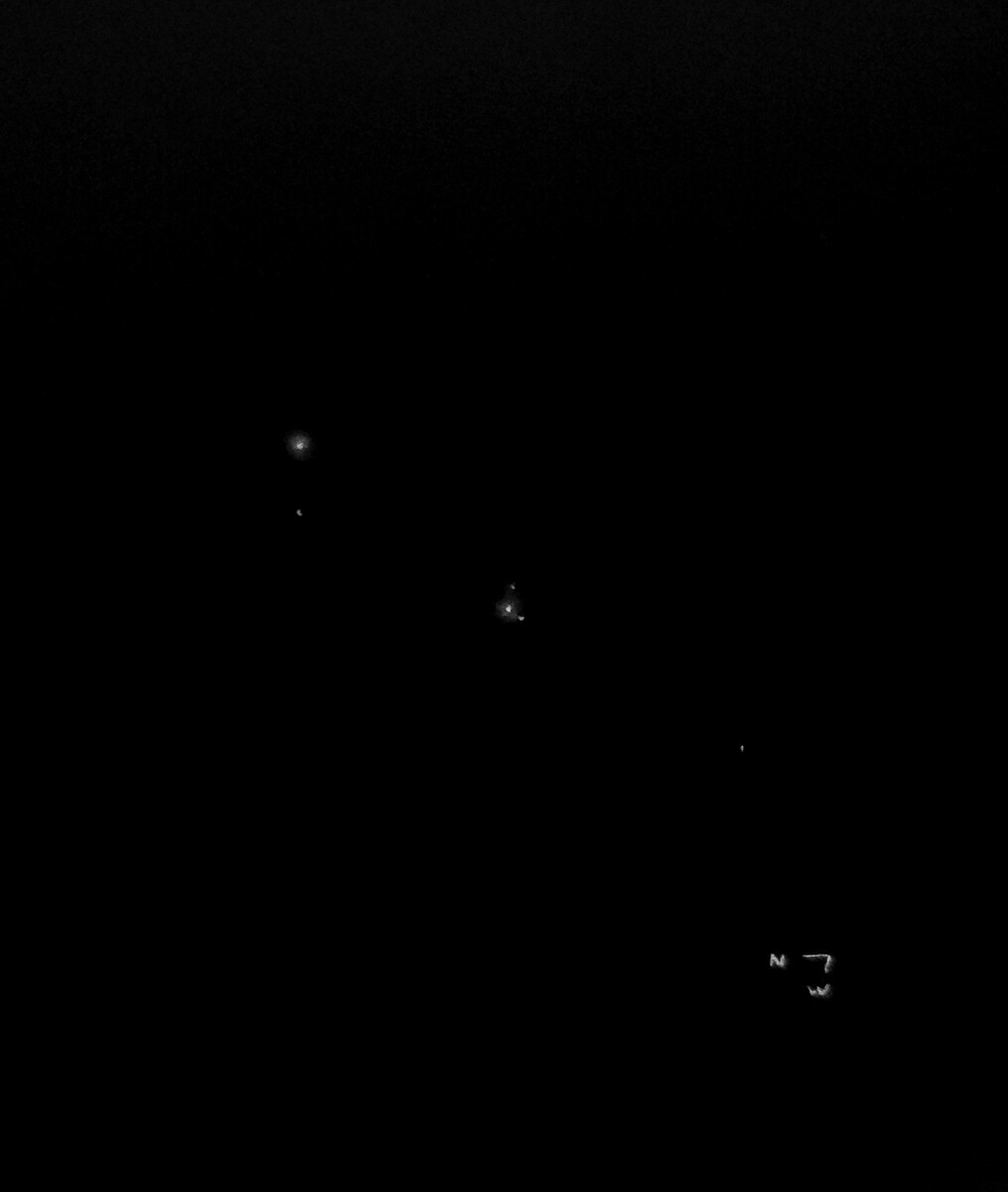
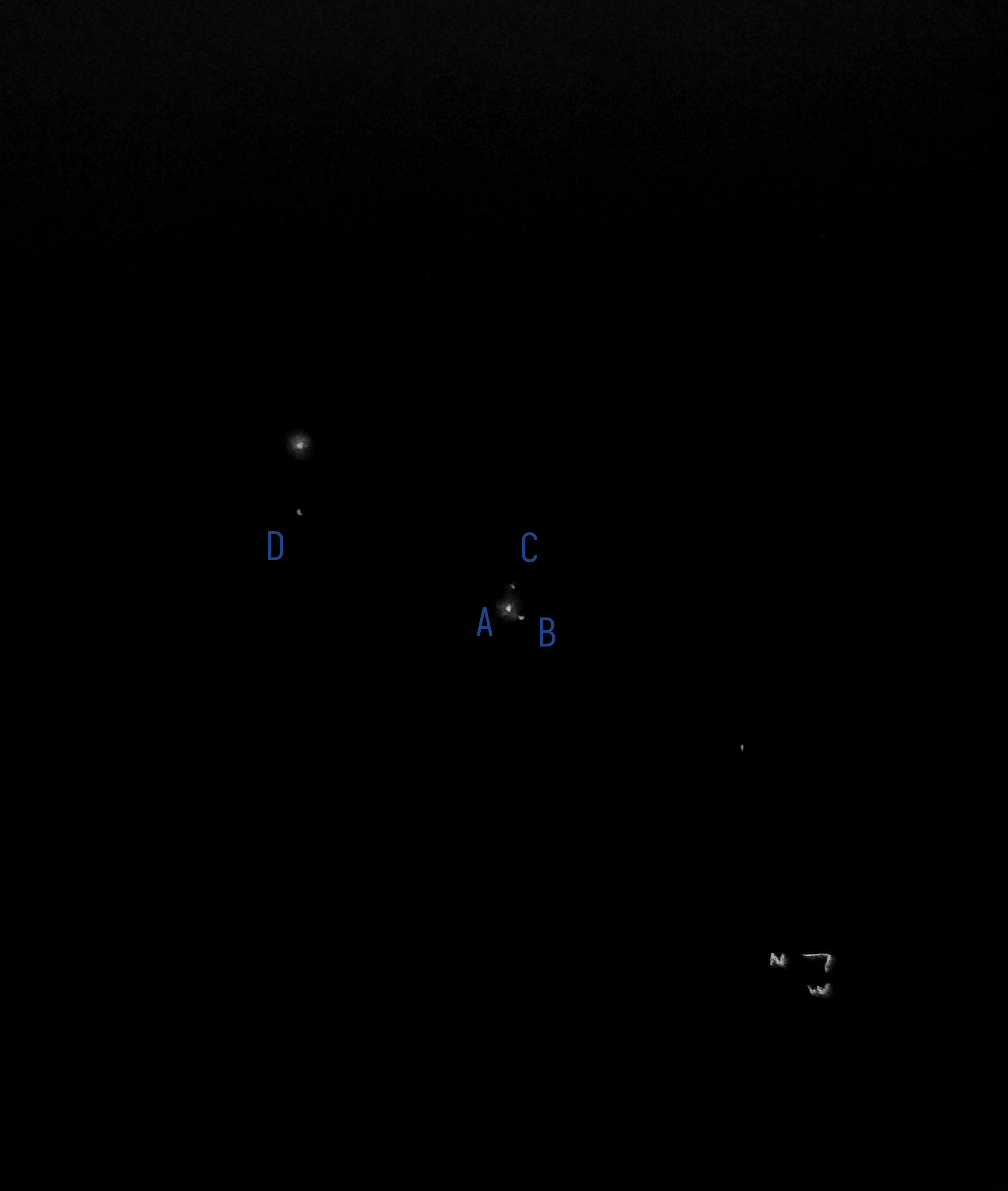
Great crisp observation of this target tonight. C could just be detected at 55x prior to zooming in, and the closer B could not be seen at all.
After zooming past 150x, I was able to detect B with a clean split from the primary. 204x framed the multiple star nicely for the sketch. This is a very beautiful system, the closeness of both B and C give it a unique quality that you don’t see all that often; added as a favorite.
9:14PM
- Target: Sirius b
- Const: Canis Major
- RaDec: 06h46m -16.45
- Type: Star (Double)
- Mag: -1.47
- Scope: AT102ED
- Setting: 234x
I always forget exactly how bright Sirius is until I observe it again. It is one of the few stars that produces visible “rays” of light through the eyepiece in contrast to the perfect round dots that I’m accustomed to. I took a good bit of time trying different magnifications and micro-focusing adjustments until I noticed that the “rays” of light were stretched and biased to the west-south-west.
At first I wondered if this was evidence of a misalignment of the optics in my scope. I defocused my view of Sirius until I could see nicely rounded diffraction rings; disproving this hypothesis. I then began to wonder if the less-biased and shortened light rays on the east-north-east of Sirius could be evidence of the presence of the sibling.
I continued to observe for a while using various tricks to attempt to spot the sibling, but to no avail. I never did see a clear pin prick of light that I would expect, however I did consistently detect the bias of the elongated light rays to the west-south-west.
After coming in for the night, I was able to confirm the actual location of B is currently to the east-north-east. While this was not a full observation, I count it a small victory. I will continue to attempt Sirius B on nights of good seeing until I’m able to spot it.
9:45PM
- Target: M 42, Orion Nebula
- Const: Orion
- RaDec: 05h35m -5.27
- Type: Diffuse Nebula
- Scope: AT102ED
- Setting: 55x
The crispness of the air tonight was calling me to a casual observation of M42. The nebula was very clear tonight, in fact it might have been one of the best observations of M42 I’ve been able to achieve. As I sat looking at it for 15 minutes or so, I could see variation and detail in the nebula that I have not been able to observe before; especially noticeable on the south-western side of the nebula.